


While deterministic algorithms in computer science offer comfort through predictability and provability, human psychology paradoxically exhibits an attraction to unpredictability. This article explores the phenomenon of intermittent reinforcement—a behavioral conditioning schedule where rewards are delivered inconsistently. By examining the neurological underpinnings, historical discovery, and modern applications of this powerful psychological mechanism, we reveal why unpredictable feedback loops create the most resistant behavioral patterns and how this principle is actively employed to shape human behavior across gambling, technology, relationships, and commerce.
Introduction: The Paradox of Predictability
In computer science, the gold standard for process design is the deterministic algorithm. A deterministic system ensures that given a specific input, the algorithm will always produce the same output. It is predictable, testable, and, to a certain degree, provable. For an engineer, a system that behaves identically every time is a system that works.
However, when we apply this logic to human behavior, a striking contradiction emerges. Humans are rarely “addicted” to perfectly predictable processes. Consider a standard vending machine: you insert currency, press a button, and a snack appears. The ratio of action to reward is 1:1. While useful, this interaction generates no excitement. If the machine malfunctions—taking the money but dispensing no snack—the user will likely try once more, but then quickly abandon the machine, perhaps even demanding a refund. The behavior (using the machine) extinguishes rapidly once the reward ceases.
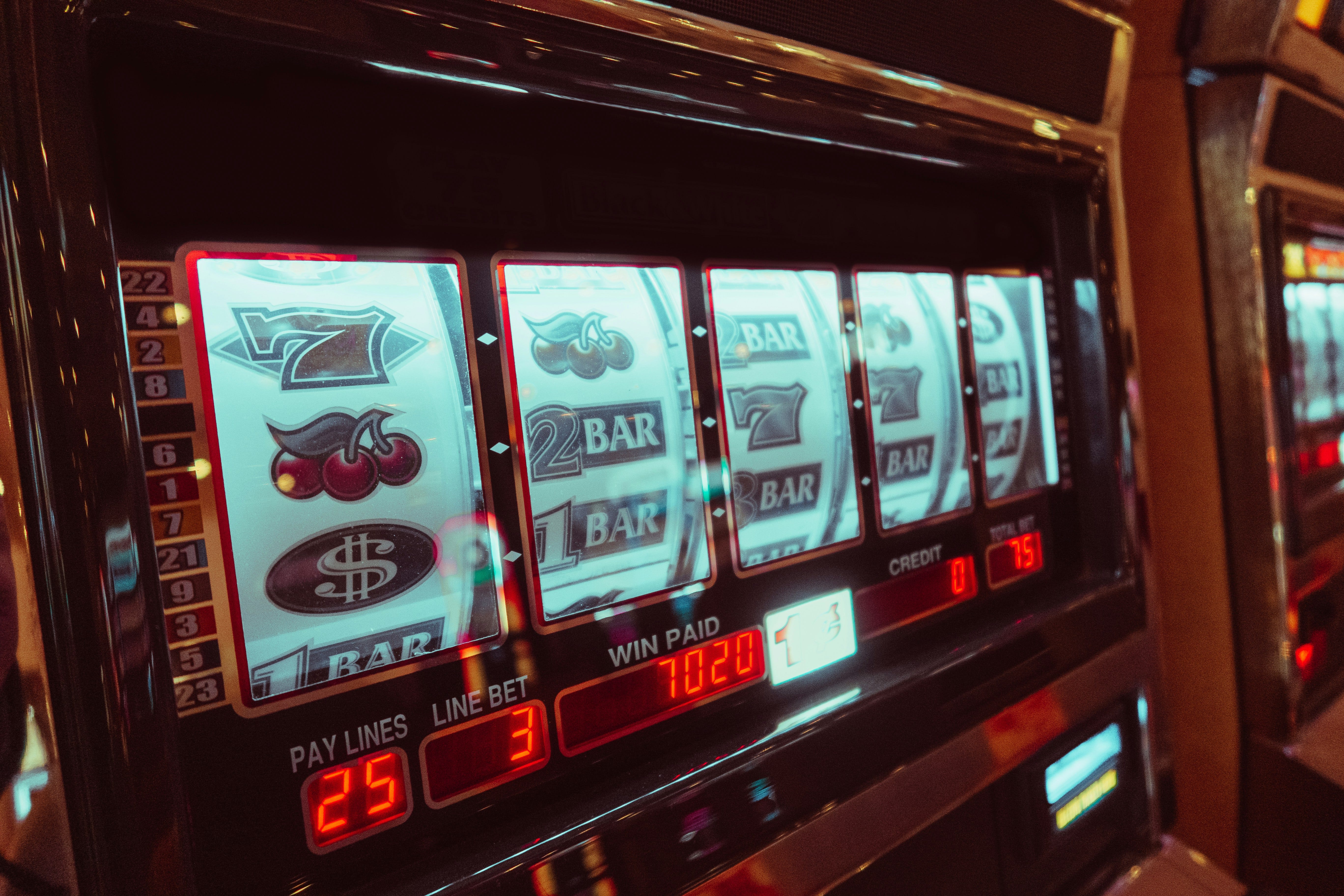
Contrast this with a slot machine. The user inserts currency, presses a button, and the outcome is unknown. Most often, the money is lost. Occasionally, a small reward is returned. Rarely, a large jackpot occurs. This is a stochastic process—randomness is built into the system. Despite the mathematical certainty that the user’s expected value is negative, millions of people compulsively engage with these machines.
The scale of this phenomenon is staggering. The global gambling market was valued at over $546 billion in 2024, with slot machines and electronic gaming devices generating the largest share of casino revenue. In the United States alone, commercial casinos generated $72 billion in 2024. These numbers exist despite the mathematical certainty that the house always wins—a testament to the power of intermittent reinforcement over rational decision-making.
This article argues that the very “defect” that would ruin a vending machine—unpredictability—is the feature that drives engagement in gambling, social media, toxic relationships, and countless other domains of modern life.
The Discovery: B.F. Skinner and Operant Conditioning

The concept of intermittent reinforcement has its roots in the behavioral psychology research of B.F. Skinner in the mid-20th century. Skinner’s work on operant conditioning—the process by which behaviors are strengthened or weakened based on their consequences—laid the foundation for understanding how different patterns of reinforcement affect behavior.
Through extensive laboratory experiments, primarily using rats and pigeons in controlled environments (the famous “Skinner box”), Skinner identified two primary categories of reinforcement schedules:
Continuous Reinforcement
Continuous reinforcement occurs when every correct behavior is rewarded. This schedule is excellent for teaching a new behavior—for example, training a dog to sit by giving a treat every single time it acts correctly. However, Skinner discovered that once the reward stops, the subject quickly realizes the “game” is over, and the behavior stops. The behavior extinguishes rapidly.
Intermittent (Partial) Reinforcement
Intermittent reinforcement (also called partial reinforcement) occurs when rewards are given only sometimes. This schedule mimics the stochastic nature of the slot machine—the behavior is reinforced, but not every time.
Skinner identified several subtypes of intermittent reinforcement schedules:
Fixed Ratio (FR): Reward after a set number of responses (e.g., every 10th lever press)
Variable Ratio (VR): Reward after an unpredictable number of responses (e.g., on average every 10th press, but could be the 3rd, 15th, or 22nd)
Fixed Interval (FI): Reward for the first response after a set time period
Variable Interval (VI): Reward for the first response after an unpredictable time period
Of these, the variable-ratio schedule proved the most powerful at creating persistent behavior—and the most resistant to extinction.
The Mechanism: Why Unpredictability Is So Powerful

The Partial Reinforcement Extinction Effect (PREE)
The most significant implication of intermittent reinforcement is the Partial Reinforcement Extinction Effect (PREE). This term refers to the finding that behaviors learned through intermittent reinforcement are significantly harder to extinguish (unlearn) than those learned through continuous reinforcement.
When rewards are predictable, stopping them leads to quick behavior extinction. But with intermittent reinforcement, the uncertainty creates a “maybe this time” mentality that sustains the behavior much longer—even when rewards become very rare.
This creates a high response rate. The subject becomes more persistent, increasing the frequency of the behavior in hopes of triggering the elusive reward. In laboratory settings, animals trained on intermittent schedules will press a lever thousands of times without a reward, whereas animals trained on continuous schedules give up almost immediately.
The Dopamine Connection
The neurological basis for intermittent reinforcement’s power lies in the brain’s dopamine system. The unpredictability creates a powerful dopamine loop—but critically, dopamine is not just a chemical of pleasure. It is a chemical of seeking and anticipation.
Neuroscience research has shown that the uncertainty of whether a reward will come causes a spike in dopamine that actually exceeds the level released by the reward itself. This explains the “maybe this time” mentality that sustains behavior even when rewards become very rare. The brain becomes hooked not on winning, but on the possibility of winning. This is why a gambler continues playing long after logic would dictate stopping—each pull of the lever triggers the dopamine-fueled anticipation, regardless of the outcome.
Real-World Applications: How Intermittent Reinforcement Shapes Modern Behavior

While the concept originated in animal studies, intermittent reinforcement is now actively applied across numerous human domains to deliberately shape behavior:
Gambling and Gaming
Casinos represent perhaps the most direct application of Skinner’s research. They rely on variable-ratio schedules, in which a reward occurs after an unpredictable number of responses. This ensures high-velocity play and resistance to stopping. Slot machines are specifically engineered to maximize the PREE—near-misses (where symbols almost align) are programmed to occur more frequently than chance would dictate, reinforcing the “maybe next time” belief.
The gambling industry’s massive revenue—over $500 billion globally—demonstrates the effectiveness of this psychological mechanism at an industrial scale.
Social Media and Digital Technology
Social media platforms have become perhaps the most pervasive application of intermittent reinforcement in modern society. These platforms utilize several mechanisms:
“Pull-to-refresh” mechanisms: The physical gesture of pulling down to refresh a feed mimics pulling a slot machine lever
Algorithmic feeds: Content (rewards) is delivered unpredictably—a user may scroll past ten uninteresting posts to find one entertaining video
Likes and comments: These social rewards arrive unpredictably, keeping users checking back compulsively
Notifications: The red badge icon provides intermittent rewards that trigger compulsive checking behavior
The result is what researchers call ”smartphone addiction”—the compulsive need to check devices driven by the anticipation of unpredictable social rewards.
Toxic Relationships and Trauma Bonding
In interpersonal dynamics, intermittent reinforcement manifests in toxic relationship patterns. A partner may alternate between affection and neglect. The victim, conditioned by the occasional “good times,” endures long periods of neglect, waiting for the intermittent “reward” of affection to return.
This pattern creates what psychologists call ”trauma bonding,” where occasional affection amid neglect creates stronger emotional bonds than consistent, predictable affection. The unpredictability of when warmth will return keeps the victim engaged in the relationship far longer than rational assessment would suggest.
Parenting and Child Behavior
The “parenting trap” occurs when parents inadvertently reinforce negative behaviors through intermittent attention. For example, if a child throws tantrums and the parent sometimes gives in (to stop the tantrum) but sometimes doesn’t, the child learns that persistence will eventually work. This creates more persistent tantrums than if the parent had never given in.
The variable ratio of “tantrums that work” creates exactly the type of persistent behavior that is most resistant to extinction.
Video Games and Loot Mechanics
Modern video games employ intermittent reinforcement through:
Loot boxes: Random rewards that might contain rare items
Random drops: Enemies that occasionally drop valuable items
Gacha mechanics: Digital “capsule machines” with randomized rewards
Achievement systems: Unpredictable badges and rewards for various actions
These mechanics keep players engaged for extended periods, chasing the dopamine rush of unpredictable rewards.
Artificial Intelligence and Reinforcement Learning
Ironically, the same psychological principle discovered in behavioral psychology has become foundational to modern artificial intelligence. Reinforcement learning—the technique behind systems from AlphaGo to aspects of ChatGPT—mirrors this dopamine-driven learning process. The AI agent learns through trial and error in uncertain environments, optimizing its behavior to maximize cumulative rewards, much like a brain seeking a dopamine payoff.
Hedonic Optimization
Modern consumer technology increasingly employs what researchers call ”hedonic optimization”—the systematic engineering of products and services to maximize engagement through intermittent reinforcement. This includes:
Streaming services that auto-play the next episode (removing the “stopping point”)
Dating apps that reveal matches intermittently
E-commerce sites with “flash sales” and limited-time offers
Email marketing with unpredictable discounts
Each of these applies the same principle: unpredictable rewards create stronger behavioral patterns than predictable ones.
Constructive Applications: Harnessing the Mechanism for Good

Not all applications of intermittent reinforcement are manipulative or harmful. The same psychological principles can be harnessed for positive outcomes:
Recreation and Hobbies
Fishing provides a classic example—you don’t catch a fish every cast, but the occasional catch keeps you fishing for hours. The unpredictability transforms what could be a tedious activity into an engaging pursuit. This same principle applies to many hobbies:
Golf (the occasional perfect shot)
Photography (the rare stunning image)
Thrift shopping (the unexpected treasure)
Birdwatching (spotting a rare species)
Educational Technology
Language learning platforms like Duolingo use streaks and unpredictable bonus rewards to encourage daily practice. The variable rewards help maintain engagement with educational content that might otherwise feel repetitive.
Fitness and Health Applications
Fitness apps employ intermittent reinforcement through:
Surprise badges or achievements
Variable rewards for completing workouts
Unpredictable encouragement messages
Random bonus points or unlocked features
Understanding this mechanism allows designers to create positive behavioral loops—encouraging learning, health, and productivity rather than compulsion.
Escaping the Uncertainty Trap: Strategies for Breaking Free

Recognizing intermittent reinforcement is the first step to breaking its hold. Practical strategies include:
Identify the Variable Reward
Ask yourself: What unpredictable “prize” am I chasing? Is it social media likes? Affection from someone? A jackpot? A rare item in a game? Making the implicit reward explicit helps break the automatic behavior loop.
Make the Implicit Explicit
Slot machines work because the odds are hidden. Research the actual probability of the reward you’re seeking. Understanding that a slot machine pays out on average once every 200 pulls (for example) transforms the mysterious into the mechanical.
Create Friction
Social media’s power comes from frictionless “pull-to-refresh” access. Adding barriers disrupts the automatic behavior loop:
App timers that limit usage
Leaving your phone in another room
Disabling notifications
Using grayscale mode to reduce visual appeal
Requiring a password before opening certain apps
Substitute with Predictable Rewards
Replace variable reward activities with ones that offer consistent satisfaction—the “vending machine” experiences that don’t trigger compulsive behavior. Reading a book provides a predictable level of engagement without the dopamine roller coaster.
Calming the nervous system requires moving from a state of ‘seeking’ (high dopamine) to a state of ‘satisfaction’ (serotonin/oxytocin), which is found in predictable, high-agency activities.
Recognize the PREE and Practice Patience
Understand that behaviors learned through intermittent reinforcement are significantly more challenging to extinguish than those learned through continuous reinforcement. This means recovery takes longer than expected—you will experience intense urges to return to the behavior long after you’ve logically decided to stop. Patience with yourself is essential.
The behavior will feel harder to quit than it “should”—this is not a personal failing, but rather the predictable result of how the behavior was reinforced.
Ethical Considerations: The Responsibility of Designers

As our understanding of intermittent reinforcement has grown, so too has the ethical responsibility of those who design products, services, and experiences. There is a fundamental difference between:
Engaging design: Creating products that are enjoyable and satisfying to use
Exploitative design: Deliberately engineering psychological dependence through intermittent reinforcement
Key questions for ethical design include:
Is the variable reward schedule serving the user’s stated goals, or the company’s engagement metrics?
Are users informed about how the reinforcement mechanism works?
Can users easily exit or limit their engagement?
Does the design respect users’ time and attention as valuable resources?
Several jurisdictions have begun regulating specific applications of intermittent reinforcement, particularly loot boxes in video games marketed to children, recognizing them as a form of gambling. However, most applications in social media, apps, and digital platforms remain unregulated.
Conclusion: From Unwitting Subject to Informed Agent
The deterministic algorithms favored by computer scientists are efficient for solving logical problems, but they fail to capture human susceptibility to the unknown. While humans logically prefer reliability, our neurobiology is wired to chase the unpredictable. Understanding intermittent reinforcement explains why we are quick to abandon a broken tool but slow to leave a rigged game. It reveals that the strongest behavioral chains are often forged not by the guarantee of success, but by the captivating possibility of it.
The principle discovered by B.F. Skinner’s laboratory experiments with rats and pigeons has become one of the most powerful tools for shaping human behavior in the modern world. From the casino floor to the smartphone in your pocket, from toxic relationships to AI systems, intermittent reinforcement operates as an invisible force guiding behavior through the power of uncertainty.
Yet this knowledge is not merely academic. By understanding the mechanics of the uncertainty trap, we gain the power to recognize when we are caught in one—and the tools to escape. Whether designing ethical technology, building healthy relationships, or simply understanding our own compulsive behaviors, awareness of intermittent reinforcement transforms us from unwitting subjects of a psychological experiment into informed agents of our own choices.
The most powerful algorithms for human behavior are not deterministic—they are stochastic. But unlike laboratory animals, we have the capacity to understand the mechanism, recognize when it’s being used on us, and choose whether to continue playing a game we cannot win.