

Introduction: The Illusion of the Perfect Coder
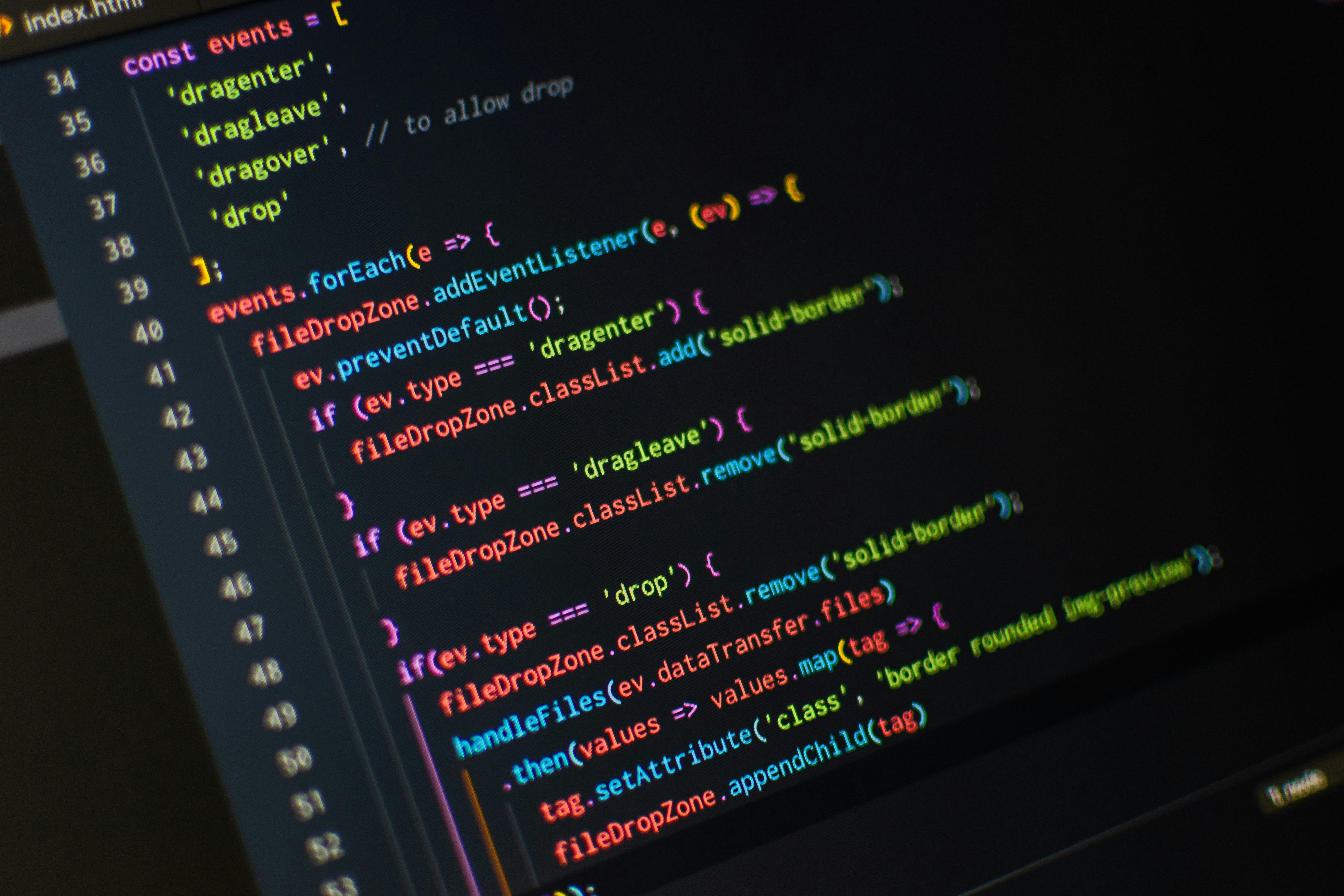
It is a magical moment that every developer knows by now: You describe a desired function in a simple prompt, hit Enter, and watch as the cursor races across the screen, generating flawless, syntactically perfect, and often elegantly commented code. Models like GPT, Gemini, and Claude, and specialized tools like GitHub Copilot, have ushered in an era where the actual “writing” of code has become trivial.
The hype is deafening. Headlines suggest that AI will replace entire software teams in just a few years. Yet, anyone who pushes these models to their limits in real-world development quickly hits a hard reality: If you ask an LLM to design a complex architecture for a new microservice or to fix an obscure bug spanning half a dozen legacy files, the illusion collapses. The code automaton hallucinates APIs, forgets edge cases, or delivers solutions that are brilliant in isolation but catastrophic in the context of the overall system.
Why is this the case? Why can an AI implement a Quicksort algorithm in Rust in a fraction of a second, but fails to cleanly abstract the business logic of a mid-sized company into database tables? The answer leads us away from current AI research and back to the year 1986—to one of the most important essays in computer science history.
Part 1: Fred Brooks and the “Silver Bullet”

To understand what Large Language Models (LLMs) truly achieve in programming—and what they don’t—we must grasp what software engineering is at its core. Turing Award winner and software pioneer Fred Brooks perfectly encapsulated this in his legendary 1986 essay, “No Silver Bullet — Essence and Accidents of Software Engineering.”
Brooks posited that there would be no single technology (no “silver bullet”) that would increase software development productivity by an order of magnitude within a decade. His reasoning was based on a fundamental division of programming difficulties: he categorized them into Accidents and Essence.
The Accident encompasses the practical and technical hurdles. It is the drudgery of typing correct syntax, fixing compiler errors, tracking down memory leaks, or digging through poor documentation. These are problems that exist because our tools and languages are imperfect.
The Essence, on the other hand, is the inherent, conceptual complexity of the software itself. It is the task of translating a chaotic, real world into precise data structures, algorithms, and interfaces. The essence lies in decomposing the problem into logical sub-problems, designing the architecture, and deciding what the system should actually do.
When we put on these glasses from 1986 and look at the year 2026, it becomes crystal clear what is happening in the AI revolution: LLMs are the ultimate weapon against the accident.
They do the typing for us. They correct missing semicolons. They translate seamlessly from Python to Go. They explain incomprehensible error messages. For the mechanical implementation, they are a massive productivity boost.
But the essence remains entirely untouched. A language model cannot proactively and presciently deconstruct a problem if the system architecture has not already been meticulously laid out by a human. The intellectual heavy lifting—understanding the problem, breaking it down into solvable units, and the architectural design—requires a mental model of reality that a probability-based text generator simply lacks.
The AI types the code, but the human must still build the architecture of thought.
Part 2: The Architecture of Language Models – Why Next-Token Prediction Isn’t Planning

To grasp why the essence of software development remains so inaccessible to AI, we need to take a brief look under the hood of models like GPT or Claude. At their core, all these systems are based on the Transformer architecture. They are so-called autoregressive models.
In simple terms, their only fundamental task is to calculate probabilities for the next text fragment (token) based on all preceding tokens. Formally, this principle of next-token prediction can be expressed as:
The model calculates the probability for the next token, given the sequence of previous tokens.
This mechanism is staggeringly simple yet incredibly powerful for pattern recognition and syntax. But it has a crucial blind spot: An autoregressive model does not plan ahead.
When a human software architect solves a complex problem, they use “System 2” thinking (borrowing from psychologist Daniel Kahneman): They deconstruct the goal, sketch an abstract plan, test hypotheses mentally, discard them (backtracking), and only then decide on an architecture.
A bare LLM does none of this. It linearly generates the next word that statistically best fits the current context. It builds the tracks while the train is already running at full speed. While techniques like “Chain-of-Thought” prompting (forcing the model to output its intermediate steps) can stretch this linear thinking, they do not change the fundamental architecture: The model possesses no internal, consistent world model of software architecture in which it can simulate various solutions and choose the best one. It merely reproduces problem-solving patterns it has seen in its training data.
If the exact pattern for decomposing your specific, novel business problem doesn’t exist in the terabytes of GitHub data, the train will inevitably crash.
Part 3: What Empirical Research Says (The Reality Check)

That this is not just a theoretical limitation, but a hard reality in practice, is proven by current AI research. The hype surrounding “Autonomous Coding Agents” often fails to withstand scientific scrutiny.
A prime example is the work of renowned AI researcher Prof. Subbarao Kambhampati. In his studies (summarized in the paper “LLMs Can’t Plan, But Can Help Planning in LLM-Modulo Frameworks”), he dismantles the illusion that language models possess inherent planning capabilities (reasoning). Kambhampati demonstrates that LLMs merely engage in a form of “approximate retrieval.” They recall approximate, memorized plans. As soon as a task requires genuine, combinatorial planning that requires strict adherence to dependencies, its performance collapses dramatically. His conclusion: LLMs are fantastic brainstormers and translators, but verification and logical structuring must be provided by external systems (or, indeed, by humans).
This becomes even clearer when looking at software development benchmarks like SWE-bench (Software Engineering Benchmark). While LLMs shine at isolated code completions (as in the HumanEval benchmark), SWE-bench tests how models handle real, unresolved GitHub issues in large, complex repositories (such as Django or scikit-learn).
The task: Read the issue, find the relevant files in the codebase, understand the context, and write a patch that solves the problem without breaking existing tests. The results are sobering. Even the most modern models and agent frameworks fail on the vast majority of tasks here. Solution rates have long hovered in the single or low double digits.
The reason is precisely that essence Fred Brooks described: To fix a bug in a deeply nested architecture, mastering Python syntax is not enough. You must understand the invisible logical threads that hold the system together. You have to decompose the problem. And it is exactly here that the human mind is currently still miles ahead of the next-token predictor.
Part 4: The Evolution of the Developer and the Return of “Computational Thinking”

What do these insights mean for us now? Should we throw our hands up in despair because the models are “just” next-token predictors? On the contrary. The paradox of the AI revolution is that it makes deep, classical computer science knowledge more valuable than ever, not obsolete.
We are currently experiencing the renaissance of Computational Thinking. This term, popularized by computer scientist Jeannette Wing in 2006, describes the ability to formulate problems so they can be solved by an information-processing system (whether human or machine).
If the actual coding—the accident—is automated by LLMs, the human developer’s focus shifts 100 percent to the essence. The tasks of the future look different:
Decomposition: Breaking down a monolithic business problem into small, manageable, and algorithmically solvable sub-problems. This is exactly where the LLM fails, and exactly where the developer’s work begins.
Abstraction and Modeling: Deciding which data structures best represent reality. What does the database schema look like? What entities exist?
Interface Design: How do the sub-problems (and later the microservices or classes) communicate with each other? What invariants must hold?
Verification: Checking the AI-generated sub-solutions for logical consistency within the overall architecture.
The developer of the future is no longer a code-typing machine. They will become a system architect, a domain expert, and an orchestrator. The LLM acts as a kind of tireless, brilliant, but extremely short-sighted junior developer on steroids. You can tell it: “Write me a performant function that sorts this list by criterion X and catches error Y.” But you must never say: “Build me the system.”
Conclusion: AI as a Cognitive Prosthesis

The fear that AI will eradicate software engineering stems from a fundamental misunderstanding of what software engineering actually is. For too long, we have confused the craft of programming with the typing of code.
Models like GPT, Gemini, and Claude are not independently thinking machines that have penetrated the essence of Fred Brooks’ complex systems. They are statistical pattern recognition machines. As such, they are the most powerful cognitive prostheses we have ever invented to overcome the practical hurdles of our profession.
In the future, we will spend less time on StackOverflow looking for the right syntax for a Regex expression. That is a reason to celebrate, not to panic. The real work—the deep understanding of the problem space, the design of elegant architectures, and algorithmic thinking—remains exactly where it has always been: in the human mind. Those who understand the problem and can decompose it into its atoms are king; those who can only type code will be replaced.